
 English
 العربية
 Français
 Русский
 Español
 Português
 Deutsch
 Italiano
 Nederlands
 Bahasa Indonesia
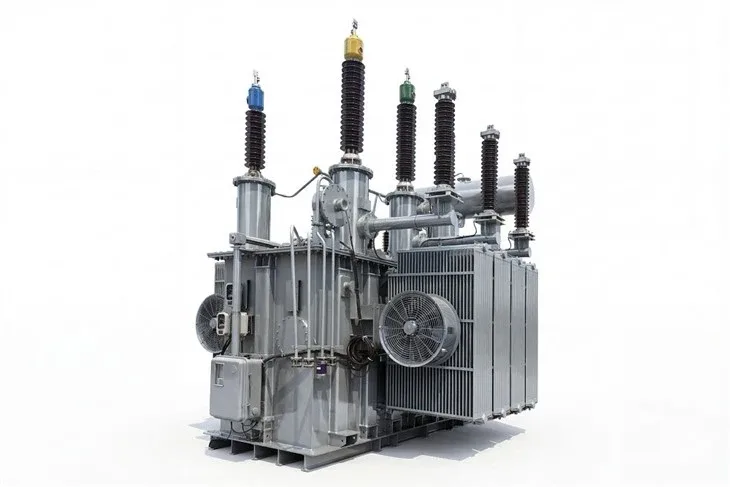
Transformer Specification Checklist for an Engineering RFQ
A transformer specification checklist should let you compare bids without rebuilding each supplier's assumptions. Start with the load, system diagram and installation space. Then put every rating beside the condition that defines it. Clear inputs prevent late changes to terminals, cooling and site works, and give your purchasing team a firmer basis for comparing prices.
What information makes a transformer specification usable?
A usable specification puts the electrical duty, site conditions and installation interfaces into one coordinated package. State the rating, winding voltages, frequency and connections clearly. Add losses, impedance and acceptance records with their reference conditions. You can then compare bids line by line and spot a changed assumption before drawing approval.
Keep the data sheet, single-line diagram and layout at the same revision. Changing a winding voltage can change cables, insulation and associated equipment. Update those records together, rather than letting a later drawing sit beside an earlier quotation.
| RFQ field | Completed entry | Basis to record |
|---|---|---|
| Construction and phase | Three-phase oil-immersed transformer | Continuous duty at the stated site |
| Apparent-power rating | 1,000 kVA | Load profile and cooling arrangement attached |
| Winding voltages | 33/0.4 kV | Both line-to-line |
| Frequency and connection | 50 Hz; Dyn11 | Terminal and neutral diagram attached |
| Impedance | 6.0% | 1,000 kVA base, nominal tapping, 75 °C reference |
| No-load loss | 1.2 kW | Rated voltage and frequency |
| Load loss | 10.5 kW | Rated current, 75 °C reference |
| Cooling | ONAN | Oil natural, air natural; rating to be confirmed |
| Installation | Outdoor; 35 °C ambient; 900 m altitude | Actual environmental assessment attached |
| Required documents | Data sheet, connection drawing, layout and test schedule | Offered values and departures returned together |
Sample values are for explanation only; the project specification governs.
Use the distribution transformer category to choose the equipment family. Then define accessories, enclosures and work supplied by other contractors. A clear boundary matters as much as the main electrical rating when you compare the installed scope.
Yuantong's team includes 40+ power technicians and 30+ R&D staff. Start your enquiry with the system diagram and the constraints you already know.
For example, Yuantong supplied one 6,300 kVA, 35/11 kV OLTC power transformer to Tesla LLP in Kazakhstan in June 2024.
How should ratings and operating conditions be separated?
Record active power, power factor and apparent power separately, then show how the load changes over time. Use kVA = kW ÷ power factor for a stated operating point. Transformer selection also needs starting duty, harmonics, cooling and future load, so the conversion alone does not complete your rating decision.
A steady 800 kW load at a true power factor of 0.8 draws 1,000 kVA. The power factor belongs to that load condition. Include sustained demand and short peaks separately, rather than hiding both inside one spare-capacity percentage.
Separate nominal system voltage, rated winding voltage and highest voltage for equipment. Label each value line-to-line or line-to-neutral. This prevents a feeder description from being mistaken for the voltage across a particular winding.
For an on-load tap-changing power transformer, define the adjustment range, step arrangement and controller interfaces. Explain whether voltage control must coordinate with another unit. The tapping schedule and control drawing should answer those questions before you select an alternative.
Which installation and connection details can change the offer?
Cable entry, terminal position, cooling conditions and access can change the transformer configuration and the surrounding installation work. Show those interfaces on the layout before requesting a price. Your drawing should identify foundations, enclosures, auxiliary supplies and protection connections, with a named scope owner for each interface and any known access restriction.
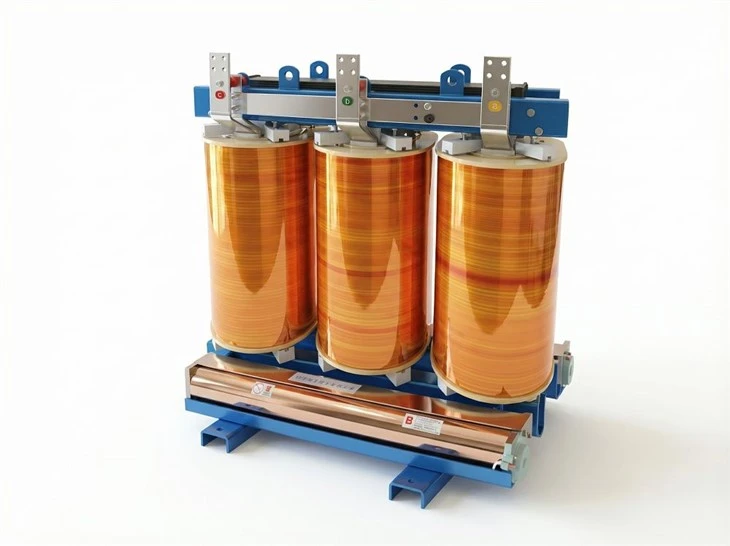
For a resin-insulated dry-type transformer, include heat release and the room's inlet and exhaust paths. For liquid-filled equipment, include the fire and containment provisions. An indoor or outdoor label gives the designer too little detail to settle either installation.
Show cable sizes, bend space and connection direction. Check the delivery route as well as the final operating position. A transformer that fits the room may still be difficult to move through the available doorway or replacement route.
If parallel duty is planned, attach the existing unit's ratio, connections, tapping and impedance records. Describe the installation through the substation transformer application page and the common-bus diagram. Equal kVA ratings alone do not establish compatible operation.
What guaranteed values and acceptance evidence should be requested?
Specify no-load loss, load loss and impedance as separate guarantees, each with units and reference conditions. Define the drawings and reports needed for acceptance before placing the order. This connects a numerical guarantee to the evidence you will review and avoids discovering missing records when the transformer is ready for dispatch.
For losses, state voltage, frequency, current basis, temperature and tapping. Identify fan and pump consumption separately. For impedance, keep the rating and voltage bases needed by the system study. A bare percentage is difficult to compare across different bases.
Use the IEC 60076-1 catalogue to identify the general transformer subject, then state the contract edition and project additions. List the test programme and any extra witnessing explicitly. A standard reference alone does not define the complete purchase scope.
For an oil-immersed distribution transformer, match report identities to the design and supplied unit. Use the factory testing page to frame your evidence enquiry. Keep design-level reports distinct from serial-number records required for the transformer being delivered.
How should frequency and standards change the RFQ?
Frequency and the governing standard are separate requirements, and both belong in your RFQ. A transformer must suit the system's voltage, frequency and thermal duty. Keep frequency alternatives in separate schedules, then check their connections and insulation requirements. A matching kVA label does not make two frequency designs interchangeable for your installation.
Voltage-to-frequency conditions affect the magnetic duty, while current and cooling affect heating. A substitution needs a technical response covering those conditions. Changing the frequency text on a nameplate is not a design assessment.
Retain the dry-type requirements under IEC 60076-11, liquid-immersed requirements under IEEE C57.12.00 and dry-type requirements under IEEE C57.12.01 as references for their respective equipment subjects. State the edition adopted by the project. The utility's connection and insulation requirements still need their own entries.
Check voltage conventions when using a replacement nameplate or a feeder schedule. Line-to-line and line-to-neutral values can describe the same network differently. Your winding diagram should remove that ambiguity before the supplier finalizes the design.
What should you send for an accurate transformer quotation?
Send the electrical schedule, load profile, system diagram, site layout and acceptance list together. Identify alternatives and unresolved inputs by name. Ask each bidder to return values and departures against the same revision. You can then compare technical scope before price, and carry the accepted answers into a clear purchase specification.
Include the delivery point, packing scope and shipping records. Assign drawing approval and system-study responsibilities early. If an input is missing, name who will resolve it and when, rather than burying the gap in a general assumptions paragraph.
Yuantong provides installation guidance and training. Bring your layout into the discussion so cable routes, ventilation and maintenance access are considered alongside the electrical duty.
Use the transformer quotation request and attach the package. Retain the final quotation revision with the accepted data sheet. Recheck losses, terminals and accessories after revisions, because a price update can accompany a configuration change.
Discuss your specification
Jiangsu Yuantong Electric Co., Ltd. has manufactured transformers in Hai'an, Jiangsu, China since 1991. With 300+ employees, 22 invention patents and qualified-supplier status with State Grid and China Southern Power Grid, we build oil-immersed, cast-resin dry-type, pad-mounted and pole-mounted transformers, box-type substations and switchgear from 10 kV to 35 kV. Send your specification to tomhardy@jsytelectric.com or WhatsApp +86 135 8518 5409 for a technical quotation.
What else should buyers clarify before issuing a transformer RFQ?
Resolve replacement data, load conversion, winding isolation, frequency suitability and the test programme before issuing your enquiry. These are common sources of incomplete bids. Put each answer beside its requirement, so you can check later revisions without reconstructing the system or relying on a nameplate photograph to explain the whole installation.
Is a transformer nameplate enough for a replacement enquiry?
No. Include the connection diagram, load profile, site conditions and physical interfaces. Mark changes in duty or location. You need those details to assess the replacement as part of the system.
Can rated power be selected directly from a kW load figure?
No. Convert the load using its power factor, then check duration, starting current, harmonics and cooling. The resulting apparent load is a selection input. It does not automatically become the transformer rating.
Does every transformer provide electrical separation between windings?
No. An autotransformer has electrically connected winding sections. State any galvanic-isolation requirement clearly. Match the winding arrangement to your earthing and protection scheme before accepting the construction.
Can a transformer designed for one frequency be substituted at another?
Only after a design check confirms the required voltage, frequency and thermal duty. Keep the written response and revised data sheet with the purchase. Equal kVA does not settle the substitution.
Should every test mentioned in a standard be included in the order?
No. Agree the test programme, report identities and any extra witnessing for the order. Distinguish design evidence from supplied-unit records. You should know how each acceptance requirement will be closed before testing starts.