
 English
 العربية
 Français
 Русский
 Español
 Português
 Deutsch
 Italiano
 Nederlands
 Bahasa Indonesia
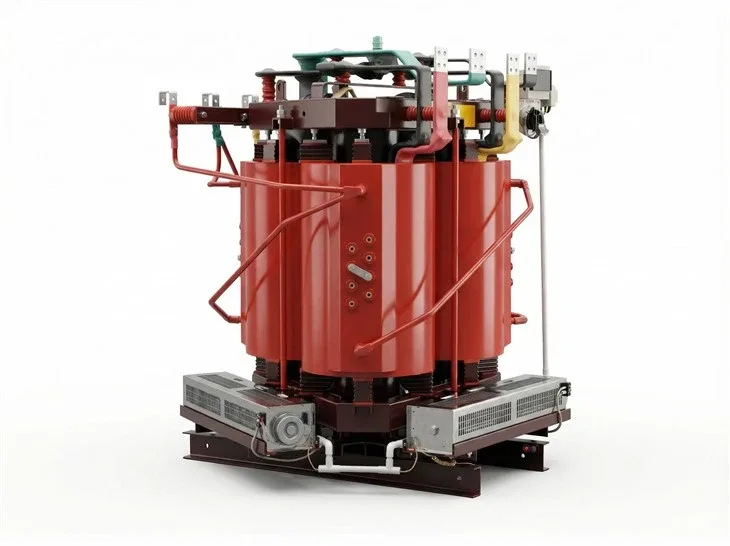
Dry Type vs Oil Immersed Transformer: Project Selection
A dry type vs oil immersed transformer comparison starts with where you will install the equipment. Inside a building, cast-resin construction removes transformer-oil containment from the room design. Outdoors, oil-immersed construction often fits naturally into a substation layout. Compare both on the same electrical duty, then work through cooling, fire provisions, maintenance and installed cost.
What decides a dry type vs oil immersed transformer choice?
For an indoor electrical room, start by evaluating cast-resin construction because it removes transformer-oil containment from the room design. For an outdoor substation, compare oil-immersed equipment first. Then check ventilation, fire provisions, access and whole-installation cost against the same electrical duty before choosing your layout.
Use the comparison below to shortlist a construction, then develop the installation around it. Neither a compact tank nor exposed coils tell you the space needed for cables, cooling and maintenance.
| Selection factor | Dry-type transformer | Oil-immersed transformer |
|---|---|---|
| Installation location | Often used in buildings and electrical rooms; outdoor use needs suitable protection | Common in outdoor installations; indoor use requires a suitable installation assessment |
| Cooling | Commonly natural or forced air, with suitable ventilation | Liquid transfers heat from the active assembly; external cooling depends on the design |
| Fire and environment | Removes insulating-liquid leakage and containment issues; solid insulation and surrounding materials still need assessment | Liquid type, fire behaviour, leakage and containment need assessment |
| Maintenance | Inspect cleanliness, connections, ventilation and fitted fans or monitors | Inspect liquid-system condition, leaks, connections and fitted accessories as applicable |
| Typical applications | Buildings, indoor substations and industrial electrical rooms | Outdoor distribution, substations and power-transformer installations |
Use the dry-type transformer category and oil-immersed transformer category to start your enquiry. Give both bidders the same load, voltage and site schedule. Put any change in cooling, enclosure or terminals into the scope comparison.
Yuantong's team includes 40+ power technicians and 30+ R&D staff. Tell us whether your main constraint is indoor space, outdoor exposure or maintenance access.
For example, Yuantong supplied 16 SCB14 dry-type transformers to State Grid Shandong Integrated Energy Service for new-energy use projects.
What fire and environmental evidence should the buyer request?
Dry-type construction removes the insulating-oil spill from your fire and environmental assessment. Oil-immersed equipment needs a deliberate choice of liquid, containment and fire provisions. For either option, review the insulation, enclosure and room together, then confirm that the installation meets local requirements before approving its location.
For cast-resin equipment, check the fire-behaviour classification and environmental class in the test report. The resin name alone does not establish either classification. Include cable terminations and nearby materials in the room review. Keep ventilation openings clear of storage and other equipment.
For liquid-filled equipment, identify the insulating liquid and read its safety data sheet. Review the tank, leak paths, containment and fire provisions as one installation. Different liquids have different properties, so name the liquid in your comparison.
Keep IEC 60076-11 and IEEE C57.12.01 with the dry-type requirements. State the contract edition and project additions. The technology and certifications page is the enquiry route for supporting evidence. Match each report to the insulation system and construction it covers.
Describe condensation, conductive dust and salt exposure in plain terms. An unheated shutdown room presents a different moisture problem from a warm operating room. Review enclosure protection and heat removal together, because closing airflow paths can raise the temperature around the windings.
How should cooling, layout and connection space be compared?
Compare the complete installation envelope, not just the transformer body. Your layout needs room for terminals, cable bends, cooling, doors and maintenance. Add containment for the liquid-filled option and ventilation paths for the dry-type option. The smaller equipment footprint can still require the larger room or site area.
AN means air natural, AF means air forced, and ONAN means oil natural, air natural. Confirm the kVA rating for each cooling mode. Fan controls, auxiliary power and the duty after fan failure belong in the same discussion. Fans do not create a standard capacity increase.
For the cast-resin transformer product family, put enclosure dimensions and air paths on the room drawing. Keep exhaust air from returning to the inlet. Size heat removal from losses and auxiliaries at the required duty, rather than kVA alone.
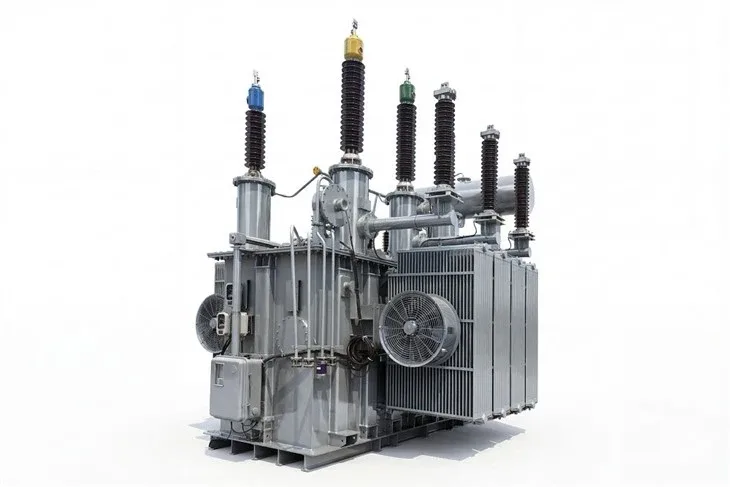
For oil-immersed equipment, include the tank, radiators, accessories and containment in the site layout. Check the delivery route and replacement route before fixing the position. Cable-entry direction can change how much usable space remains around the transformer.
Compare sound data at the same operating condition and measurement basis. Then consider room reflections and vibration transmission through the supports. An insulation-medium label gives you too little detail to rank the noise heard in an adjacent room.
How should maintenance and lifecycle costs influence selection?
Choose the construction your team can maintain, then compare total installed cost and operating losses. Dry-type equipment needs clean air paths and accessible connections. Oil-immersed equipment adds liquid-condition and leak checks. Use one load profile and cost boundary for both options so a cheaper purchase does not hide extra building work or maintenance effort.
For the oil-immersed distribution transformer family, review seal inspection, liquid checks and cooling-surface access in the maintenance manual. Add conservator or gas-relay tasks only when those components are installed. A sealed tank and a conservator arrangement need different maintenance planning.
For cast-resin equipment, plan access to connections, ventilation paths, sensors and fans. Dust accumulation reduces cooling and complicates inspection. Check whether cleaning or connection work requires an outage, and leave room to carry out those tasks.
Compare foundations, cables, enclosures, ventilation and containment alongside the equipment price. Use separate no-load and load losses, plus fan or pump consumption. Energized standby adds no-load losses even when the external load is low.
For industrial locations, use the mining and industrial transformer application page to describe your operating context. Identify contamination sources and available outage windows. Those two inputs often make the maintenance comparison more useful than a generic product-life claim.
Yuantong provides installation guidance and training. Bring your room layout so you can discuss ventilation, cable routes and maintenance access.
What should you send for an accurate selection quotation?
Send one electrical schedule, site description and layout to both bidders, and state whether both constructions are permitted. Include the load profile, environmental exposure and required reports. Compare enclosure, cooling, connections and site work together. This gives you a clear basis for choosing an installation, rather than comparing two equipment-only prices.
| Selection field | Completed entry | Information requested with each alternative |
|---|---|---|
| Common duty | Three phase; 1,000 kVA; 11/0.4 kV; 50 Hz | Matching ratings and connection drawing |
| Location | Indoor electrical room | Proposed installation arrangement |
| Site conditions | 35 °C ambient; 900 m altitude | Thermal and insulation basis for the location |
| Environmental exposure | Shutdown condensation and dust described | Enclosure and maintenance requirements |
| Fire assessment | Project fire and containment requirements attached | Construction and liquid information where applicable |
| Cooling and layout | Room, cable routes and service zones shown | Heat release, dimensions, mass and auxiliary needs |
| Evaluation scope | Installed work, losses and maintenance included | Separate quantities, exclusions and supporting documents |
Sample values are for explanation only; the project specification governs.
Use the transformer project enquiry and attach the drawings. Mark missing site inputs and name who will resolve them. Revise the comparison when a bidder changes the enclosure, terminals or cooling arrangement.
Discuss the installation options
Jiangsu Yuantong Electric Co., Ltd. has manufactured transformers in Hai'an, Jiangsu, China since 1991. With 300+ employees, 22 invention patents and qualified-supplier status with State Grid and China Southern Power Grid, we build cast-resin dry-type, oil-immersed, pad-mounted and pole-mounted transformers, box-type substations and switchgear from 10 kV to 35 kV. Send your specification to tomhardy@jsytelectric.com or WhatsApp +86 135 8518 5409 for a technical quotation.
What else should buyers ask about transformer-type selection?
Settle maintenance access, indoor fire provisions, installation space, altitude and ownership-cost assumptions before you select a transformer type. Keep those decisions with the room layout and data sheet. You can then check a later enclosure or cooling change against the same basis, without reopening the entire selection exercise.
Does dry-type construction make a transformer maintenance-free?
No. You still need to inspect connections, cleanliness, air paths and accessories. Use the maintenance manual to plan cleaning and access. Make sure the room leaves space to do that work.
Can an oil-immersed transformer be considered for an indoor location?
Yes, provided the installation meets local fire, containment, ventilation and access requirements. Identify the liquid and tank arrangement first. Review the complete room with the project designer before accepting the location.
Which transformer type needs less installation space?
The complete layouts determine which needs less space. Compare cable bends, cooling, access and containment as well as body dimensions. A smaller tank or frame does not guarantee a smaller installed area.
Does a dry-type transformer work at any site altitude without adjustment?
No. Higher altitude affects cooling and external insulation. Give the supplier the elevation and inlet-air conditions. Confirm the rating and insulation clearances for that combination before accepting the selection.
Does choosing an oil-filled design guarantee lower lifecycle cost?
No. Compare installed work, losses, auxiliaries and maintenance using one operating profile. A lower purchase price can be offset by building work or a loss profile that suits your duty less well.